


The Olympics Through the Years
The Ivy League’s tradition in the Olympics is unparalleled. Since the first Olympic Games in Athens, Greece, in 1896, Ivy athletes have thrived on the international stage every four years in both the Summer and Winter Games.

1896
Athens Games
The first modern Olympic Games in Athens, Greece attracted 241 men from 14 nations. The American team was made up of 12 men, all from the Ivy League either Columbia, Harvard or Princeton.
1900
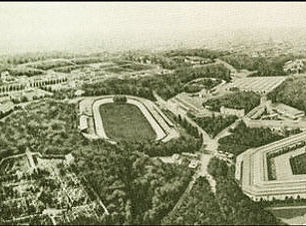
Paris Games
The 1900 Games became part of the World's Fair concurrently occurring in Paris at the suggestion of the International Olympic Committee president, French baron Pierre de Coubertin. The Olympics were held over the course of five months.

1904
St. Louis Games
Nineteen Ivy athletes made the trip to St. Louis, returning with 19 medals while participating in a diverse group of events.

1908
London Games
Originally scheduled to take place in Rome, the Italian government gave up the right to host the 1908 Games when Mt. Vesuvius erupted in 1906. 19 Ivy Leaguers competed in the 1908 London Games.

1912
Stockholm Games
The 1912 Stockholm Games are considered the most efficient and organized of that time. They were also the most diverse as the first art and literature competitions were held. Twenty-three Ancient Eight athletes traveled to Stockholm and for the first time in Olympic history, all eight schools were represented in a single Games.

1920
Antwerp Games
The 1916 Berlin Olympics were cancelled due to World War I. The 1920 Games saw the birth of two new Olympic traditions, an Athletes' Oath at opening ceremonies, and an Olympic flag.
Twenty-one athletes from the Ancient Eight competed at the Games.

1924
Paris Games
The President of the IOC and father of the modern Olympics, French baron Pierre de Coubertin, was to retire in 1925. He was pleased, however, that his native France had another chance to host the Olympics one last time. For the first time in Olympic history, at least one athlete from all eight Ivy schools returned home with a medal.

1928
Amsterdam Games
With double the number of women that had competed at the 1924 Paris Games, an increase in nations, and the introduction of the Olympic flame, the Amsterdam Games were poised to be successful.

1932
Los Angeles Games
In the midst of the Great Depression, the city of Los Angeles was only able to attract half as many athletes as the 1928 Amsterdam Games. Los Angeles was the first Olympics to have a single village, and set a precedent for the duration, as the 1932 Games were completed in 16 days. Twenty-six Leaguers made the 16-day trip.

1936
Berlin Games
The 32 athletes in Berlin from the Ivy League had the opportunity to watch track great Jesse Owens win four gold medals. The feeling of the Olympic spirit had to be savored, for it would be another 12 years before another Games took place due to World War II.

1948
London Games
London was scheduled to host the 1944 Games. With World War II still raging, however, London eventually hosted the 1948 Games, welcoming 59 nations to competition. The 1948 Games were also the first to be shown on television, allowing Ivy fans at home to see the 30 Ivy Leaguers competing in the Games.

1952
Helsinki Games
The 1952 Helsinki Games were incredibly well organized, so much so that some suggested holding the Games permanently in Scandinavia. Spectators at the Games were able to see the premiere of the Soviet Union team. Thirty-two Leaguers competed in Helsinki.

1956
Melbourne Games
As the first Olympic Games held on the southern hemisphere, Melbourne played host to 3,314 athletes from 72 nations. The 1956 Games were the latest in Olympic history, as they took place between November 22 and December 8. 39 Ivy League athletes participated in the Games.

1960
Rome Games
The 1960 Summer Olympics were the Games of American Wilma Rudolph, a three-time gold medalist in track and Cassius Clay, who won the boxing light-heavyweight gold medal in Rome prior to his illustrious career as Muhammad Ali. 20 Ivies were present in Rome were able to witness these feats and perform some of their own.

1964
Tokyo Games
The Tokyo Games were the first to be held in Asia. Hosting the Games allowed the Japanese government to display its perseverance after World War II. 42 Ivy League Athletes participated in the event.

1968
Mexico City Games
The 1968 Games were the first to be held in Latin America. Yet deeming Mexico City as the host over Detroit, Lyon, and Buenos Aires was controversial due to the city's high altitude. The Games did go on and made true to much of the Olympic motto: 'Citius, Altius, Fortius' (Swifter, Higher, Stronger). 48 Ivies competed in Mexico City.

1972
Munich Games
The 1972 Munich Games were marked by terrorism. On the morning September 5, Palestinian terrorists killed two Israeli athletes and kidnapped nine more. All competition was halted for 34 hours, but the Games went on. The Munich Games, attended by 42 Ivy athletes, set records for number of nations, participants, and events.

1976
Montreal Games
38 Ivy League athletes participated in the 1976 Montreal Games. Swimming experienced significant change in Montreal with world records broken in 21 of 26 events. Ivy Leaguer Robert Hackett (Harvard '79) was part of this onslaught of the record books.

1980
Moscow Games
The 1980 Summer Olympics were the first to be held in a Socialist country, which was an issue to the President Jimmy Carter. The administration sought the Games to be moved to another country, but when that was no longer a choice, the administration warned that any athlete who defied the ruling would be stripped of their US passports.

1984
Los Angeles Games
The City of Angels last hosted the Summer Olympics in 1932, where it became the first to turn a large profit ($1 million). After paying the bills from the 1984 Games, they were again left with a surplus but a far bigger one. It has been said that the second Los Angeles Games became the model to follow especially considering that it left a surplus of $223 million.

1988
Seoul Games
In the last Olympic Summer Games of the Cold War era, the 1988 Games were awarded to South Korea. The United States and the Soviet Republic each returned to the Olympics after boycotting each other's Games in Moscow 1980 and Los Angeles 1984. 35 Ivy Leaguers competed in the Games.

1992
Barcelona Games
Barcelona showcased the profound impact of the Olympic movement and the influence that politics can have on athletics. Countries that competed for the first time since extended time away included a postapartheid South Africa, and a unified Germany and Yemen. In all, 49 Ivy Leaguers won 13 medals in 1992.

1996
Atlanta Games
The Olympics returned to the United States after a 12-year break. Muhammad Ali, who won the boxing gold in the light-heavyweight division in 1960, lit the Olympic cauldron. 79 nations won medals, which was a record at the time (until 80 nations won medals in Sydney).

2000
Sydney Games
The Summer Olympics went Down Under for the first time since Melbourne in 1956. 10,649 athletes competed in Sydney and a record 80 nations won a medal. The 2000 Games were also one of the biggest in history as far as the Ivy League is concerned. The Ancient Eight sent 52 representatives to Australia for the Olympics, the second-highest mark ever. The League also brought home 12 medals as one gold, six silver, and five bronze medals were proudly hung around the necks of Ivy Leaguers.

2004
Athens Games
Returning to Athens, Greece for the first time since the first modern Olympic Games were held in 1896, the 2000 Summer Games were a celebration of history and tradition of the Olympic Spirit. All told, 54 Ivy Leaguers made the trip to Athens and won eight medals. The largest number of Ivy athletes competed in men’s rowing (14), women’s rowing (7), men’s fencing (4), women’s fencing (4) and women’s soccer (4).

2008
Beijing Games
The Ivy League was represented by 42 athletes at the Beijing Games and took home 14 medals — five gold, seven silver and two bronze — spread among 13 athletes. That was the highest number of League individual medalists at a Summer Games since 18 different Ivies stood on the medal platforms of Los Angeles in 1984.

2012
London Games
The Olympics return to London for the first time since 1948 and for the third time overall. 49 athletes hail from all eight Ivy League schools and represented 11 countries, including the United States, Australia, Canada, Croatia, Dominica, Egypt, Great Britain, Haiti, Nigeria, Serbia and the U.S. Virgin Islands.
.jpg)
2016
Rio Games
Rio was the first time in Olympic history that a South American country hosted the Games. The Ivy League was represented by 66 representatives from 13 countries, including the United States, Bermuda, Brazil, Cambodia, Canada, Ghana, Greece, Nigeria, South Africa, South Korea, Spain, Uzbekistan and the U.S. Virgin Islands.
2020
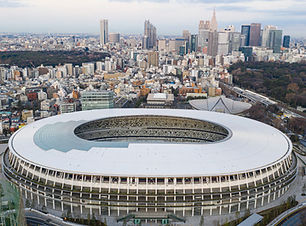
Tokyo Games
The 2020 Tokyo Olympics were postponed to 2021 due to the novel coronavirus pandemic. Tokyo conducted the Games while in a state-of-emergency due to the pandemic, thus not allowing any spectators into any of the venues.

2024
Paris Games
The Games will return to Paris for the third time in Olympic history- the first time in 100 years.
